


💡 SPOTLIGHT
Inside Russia's new system for blocking the internet — with tricks from China and Iran
There have been increasing incidents at the regional level that indicate the Kremlin is developing a system, with elements from Chinese and Iranian censorship, to restrict internet access to build a new higher level of control over information, reports Alisa Kuznetsova in Russian independent news outlet Vazhnyye Istorii.
In Russia, 2024 has begun with it a series of unprecedented Internet restrictions, each implemented with varying degrees of severity. Initially, authorities blocked popular instant messengers like Telegram and WhatsApp during the protests in the far-flung Russian republics of Bashkortostan and Yakutia. But quickly this wave of blocking access extended to other regions across the country.
Subsequently, in regions near borders with NATO member countries, including Pskov, Novgorod, and Leningrad, authorities began nightly shutdowns of mobile Internet, purportedly for undisclosed military purposes.
Finally, on January 30, the entire nation experienced a widespread outage of the .ru domain segment, supposedly due to technical issues.
What’s really going on behind these restrictions? Digital security experts investigate the signs that the Kremlin may be building a nationwide firewall to restrict internet access.
Around 18:00 Moscow time on January 30, a significant outage affected the .ru domain zone in Russia. Users reported widespread unavailability of numerous popular Russian services, including Sberbank, Yandex, VKontakte, Wildberries, Avito, and Ozon. Even attempts to access Russian sites from abroad were unsuccessful.
The Ministry of Digital Development attributed the issue to a failure in DNSSEC (Domain Name System Security Extensions), a set of protocol extensions for the domain name system (DNS). The problem was resolved several hours later. According to the Coordination Center, the blame lay with "imperfections" in the software responsible for generating DNSSEC encryption keys.
Lawyers from the Network Freedom Project speculated that the outage might be linked to Russia's efforts to establish its own national domain name service, essentially an "address book" for associating website addresses with machine-readable IP addresses. They cautioned that if the national DNS server were launched successfully, there would be no guarantee that it would direct browsers to the requested sites accurately, nor would it refrain from recording and transmitting users' request data to IP addresses.
Tech expert Philip Kulin described the incident as "a huge failure, the first in 14 years of the signature's existence." He suggested that the outage likely resulted from a maintenance error, exacerbated by the specialized nature of the task and the unavailability of the responsible specialist, who was en route to the office in Moscow. Kulin also noted that the National Domain Name System (NDNS) was incapable of functioning with DNSSEC at all.
Sarkis Darbinyan, the head of the legal practice at Roskomsvoboda, a non-governmental organization that supports open self-regulatory networks and protection of digital rights of Internet users, suggested that authorities hastily launched a backup center without thorough testing, resulting in the loss of communication with the root server.
Still, even if the national outage appears to have been a glitch, there are signs elsewhere that there are intentional actions being taken to limit internet access that may be leading to a much tougher system of censorship and information control by the Kremlin. [...]
— Read the full article by Alisa Kuznetsova for Vazhnyye Istorii, translated into English by Worldcrunch.
🌎 7 THINGS TO KNOW RIGHT NOW
• Blinken in Egypt to push for ceasefire as fighting rages in Khan Younis: U.S. Secretary of State Antony Blinken arrived in Egypt on Tuesday to meet with President Abdel Fattah El-Sisi after a brief stop in Saudi Arabia, as the U.S. pursues its quest to broker a ceasefire and a hostage deal in the four-month-old war. The top diplomat is also expected to visit Qatar, Israel, and the West Bank on the trip. Meanwhile, Israel continues its onslaught in Gaza’s main southern city Khan Younis, killing at least 14 Palestinians in airstrikes.
• EU's chief diplomat Borrell arrives in Kyiv following new Ukraine aid deal: European Union foreign policy chief Josep Borrell arrived in Kyiv on Tuesday to reaffirm the bloc’s “unwavering” military and financial support for Ukraine as the war against Russia nears its two-year anniversary. The visit comes after the EU approved a four-year 50-billion-euro aid package for Ukraine last week, which Borrell said was necessary to “defeat invasion.” Stay up-to-date with our coverage of Russia’s invasion of Ukraine here.
• Anti-government protests erupt in Haiti: Hundreds of protesters took to the streets across cities in Haiti on Monday to demand the resignation of Prime Minister Ariel Henry and his unelected government, amid increased gang violence. Clashes with police and road blockades were reported, forcing banks, schools and government agencies to close in Haiti's northern and southern regions. Henry has assumed power since the 2021 assassination of the country’s president Jovenel Moise.
• Spanish farmers join Europe-wide protests: Farmers in Spain are blocking traffic on some of the country’s main highways on Tuesday, joining their European counterparts in staging protests against costs, bureaucracy and competition from non-EU nations. To learn more about the growing movement, here’s an article from Les Echos from the heart of French agriculture country, translated in English by Worldcrunch.
• Paris Olympics chief faces probe over pay: French investigators are launching a legal probe into the pay of Tony Estanguet, the head of the Paris Olympics organizing committee, an anonymous source told the AFP. The investigation concerns in particular the conditions in which the triple gold medal-winning Olympic canoeist receives his pay.
• Three killed as historic storm sweeps California: A powerful storm unleashing record rainfall in California has left at least three people dead and caused flooding, mudslides and power outages. Governor Gavin Newsom has declared a state of emergency in eight counties.
• Striking a new chord for 639-year-long music piece: A specially-built organ that plays the longest music composition in existence changed chord for the first time in two years at the Burchardi Church in the German town of Halberstadt. The experimental piece, which was created by avant-garde composer John Cage, began in 2001 and is set to last until 2640. Entitled “Organ²/ASLSP (As Slow as Possible)”, the composition has now had 16 chord changes.
🗞️ FRONT PAGE

📰 STORY OF THE DAY
Railway chic, the designers reimagining train travel for the 21st-century jet set
If rail is to become the preferred means of transport, it must inspire people to dream again. Designers and interior architects are on a mission to restore the image of rail travel. High-speed rail, night trains, luxury trains — each has its own challenges, reports Marie Farman in French business daily Les Echos.
🛤️ The revival of night trains, new interior concepts signed by design stars, ultra-luxury cruise trains are some of the means in place to encourage travelers to abandon air travel for this more environmentally-friendly form of transportation, which is enjoying renewed interest. Last summer, France's national railway company, SNCF, handled a record 24 million passengers. “We’re clearly at a turning point. The train is a positive link in the evolution of our society, but we’re going to have to make people want to go back on it,” said Julien d’Hoker, founder of the Yellow Window design agency.
🚅 At SNCF, design has always been at the core of major developments. In the 1970s, the company began collaborating with Roger Tallon, a visionary with a passion for high-speed rail travel, who was to play a decisive role in railway design in France. He worked on the concepts for the Corail trains, the TGV duplex and even the Eurostar. He created revolutionary new layouts, such as the various living areas within trains, with lounges for young people, business travelers and dining cars.
♿ Designers have to adapt to a host of norms, take into account safety, ergonomics, durability, maintenance, accessibility and acoustics, all while initiating a new dynamic. For Maxime d’Angeac, artistic director of the new Orient Express, “It’s a very complex exercise. It’s not the work of a decorator, but of extremely advanced global design, and we cannot make mistakes. A train like the Orient Express isn’t just beautiful, it’s detailed, precise and masterful. There are no gratuitous sets, everything has a function and has to work.”
➡️ Read more on Worldcrunch.com
📹 THIS HAPPENED VIDEO — TODAY IN HISTORY, IN ONE ICONIC PHOTO

#️⃣ BY THE NUMBERS
878 days
Russian cosmonaut Oleg Kononenko, 59, has set a new record for the most time spent in space, beating compatriot Gennady Padalka’s record of 878 days. Kononenko’s eyes are now on the 1,000-day threshold, in June; his current mission aboard the International Space Station, which started last year, is set to end in 2025.
📣 VERBATIM
“Senegal’s image is ruined.”
— Senegalese lawmakers voted to delay the presidential elections until December, prompting protests and international concern. Opposition deputy Ayib Daffe declared the situation “completely catastrophic,” fearing democratic erosion. President Macky Sall, who initially called for the delay citing legal issues, is to remain in office until his successor is installed.
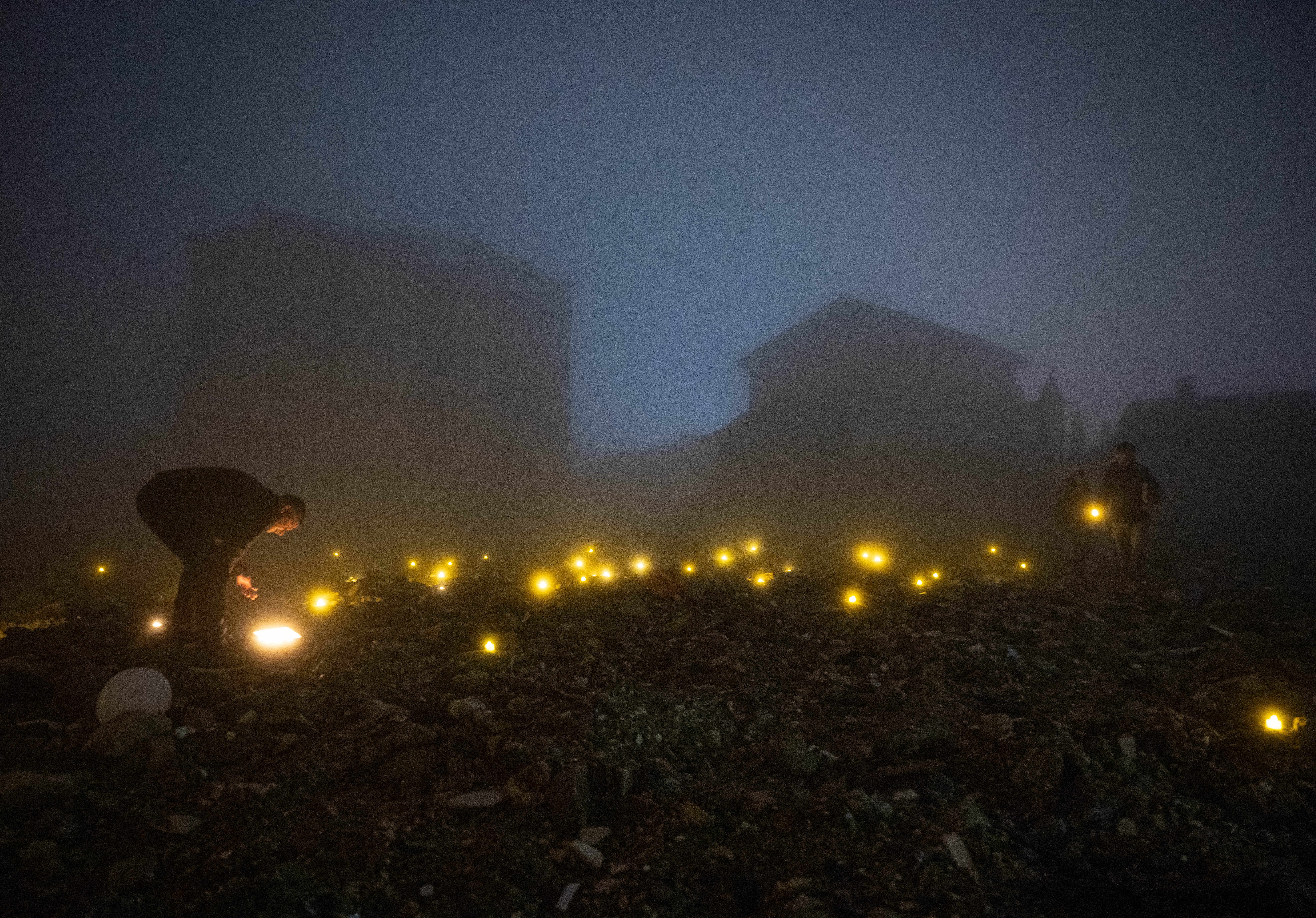
📸 PHOTO DU JOUR
👉 MORE FROM WORLDCRUNCH
• Stolen Land, Stolen Life: When An Israeli Soldier Takes A Gazan Baby Home — DARAJ
• Squalor Of War: Gazans Without Bathrooms, Mired In Sewage, Spreading Disease — MADA MASR
• When Children Report Domestic Violence — And Their Mothers Deny Everything— LA STAMPA
✅ SIGN UP
Check out and subscribe to Worldcrunch’s other newsletters: 👉Sign up here
✍️ Newsletter by Anne-Sophie Goninet and Cory Agathe