Venezuela wants to impose a Soviet-style police state — but can it pull it off?
Latin America's socialist regimes are following the “Putin model” of policing the population, inspired by Soviet practices, but in the case of oil-rich Venezuela, fortunately, the communist science of repression is not yet watertight, writes Miguel Henrique Otero in Argentine daily Clarín.
The modern police state may not have begun with the Communist takeover of Russia in 1918, but the Bolsheviks and their ruthless leader, Vladimir Lenin, made it work like nobody ever had before.
When Joseph Stalin succeeded him as strongman in the 1920s, imposing a reign of terror that would last to his death in 1953, the secret police practically engulfed the Soviet state. There had been a secret police under the czars, the Okhrana, but this was always a tool in the hands of the imperial state and the minister in charge.
The Bolsheviks however turned the state itself into a giant, pervasive policeman. Its planning and actions were driven on the assumption that every citizen was a suspect. What were Soviet citizens suspected of? Of being critics, "fascists" (often without knowing it) and enemies of Communism — and thus, they needed to be watched, cowed and coerced wherever necessary.
Every person was a walking police file waiting to be detained, charged, "disappeared" or murdered in broad daylight. No crime need have been committed.
The powers of the secret police became boundless under Stalin, as raison d'état turned to delirium. The state was now police and criminal in one. Even the oppressors lived in fear. Police chiefs had quotas to fill and targets to meet, which meant nabbing people, often by chance, at home or on the street, on illusory charges.
After World War II, the same model was imposed with greater or lesser intensity in the communist states of Eastern Europe, and later in Cuba.
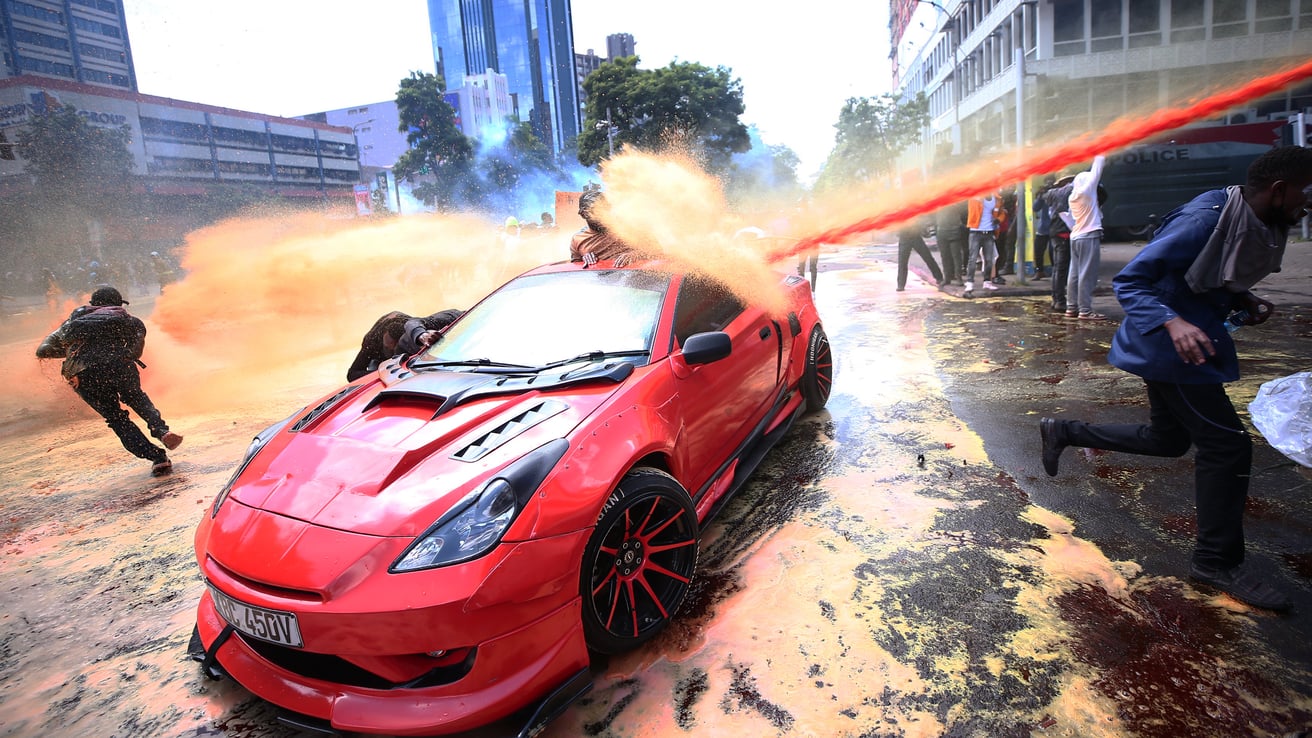
A similar polity has reemerged in Russia today under President Vladimir Putin, and in countries like Nicaragua and Venezuela, which like Cuba, will not hide their admiration for Communism. In the three cases, the police state is also militarized, as shown in the repeated occasions when police and soldiers are seen acting together against civilians.
The various security, police, intelligence and military agencies in these states collaborate and share tasks, procedures and information. They are after all working for the same boss and have the same objective: to keep the regime in place, first and foremost through terror. [...]
— Read the full article by Miguel Henrique Otero for Clarín, translated into English by Worldcrunch.
|