Kessel

24 Israelis Killed In Gaza, New U.S.-led Strikes In Yemen, Airplane Turnarounds

Welcome to Tuesday, Jan. 23, 2024, where Israel sees its worst day of losses in Gaza since its ground invasion began, a new round of U.S.-led strikes on Houthi positions in Yemen and thousands of overnight airline passengers woke up in the wrong country. We also take a backstage look at the masters of protocol in the French diplomatic corps.

Worldcrunch Today
4 min ⋅ 23/01/2024


 SPOTLIGHT

Venezuela wants to impose a Soviet-style police state — but can it pull it off?

Latin America's socialist regimes are following the “Putin model” of policing the population, inspired by Soviet practices, but in the case of oil-rich Venezuela, fortunately, the communist science of repression is not yet watertight, writes Miguel Henrique Otero in Argentine daily Clarín.

The modern police state may not have begun with the Communist takeover of Russia in 1918, but the Bolsheviks and their ruthless leader, Vladimir Lenin, made it work like nobody ever had before.

When Joseph Stalin succeeded him as strongman in the 1920s, imposing a reign of terror that would last to his death in 1953, the secret police practically engulfed the Soviet state. There had been a secret police under the czars, the Okhrana, but this was always a tool in the hands of the imperial state and the minister in charge.

The Bolsheviks however turned the state itself into a giant, pervasive policeman. Its planning and actions were driven on the assumption that every citizen was a suspect. What were Soviet citizens suspected of? Of being critics, "fascists" (often without knowing it) and enemies of Communism — and thus, they needed to be watched, cowed and coerced wherever necessary.

Every person was a walking police file waiting to be detained, charged, "disappeared" or murdered in broad daylight. No crime need have been committed.

The powers of the secret police became boundless under Stalin, as raison d'état turned to delirium. The state was now police and criminal in one. Even the oppressors lived in fear. Police chiefs had quotas to fill and targets to meet, which meant nabbing people, often by chance, at home or on the street, on illusory charges.

After World War II, the same model was imposed with greater or lesser intensity in the communist states of Eastern Europe, and later in Cuba.

A similar polity has reemerged in Russia today under President Vladimir Putin, and in countries like Nicaragua and Venezuela, which like Cuba, will not hide their admiration for Communism. In the three cases, the police state is also militarized, as shown in the repeated occasions when police and soldiers are seen acting together against civilians.

The various security, police, intelligence and military agencies in these states collaborate and share tasks, procedures and information. They are after all working for the same boss and have the same objective: to keep the regime in place, first and foremost through terror. [...]


Read the full article by Miguel Henrique Otero for
Clarín, translated into English by Worldcrunch.


FRONT PAGE

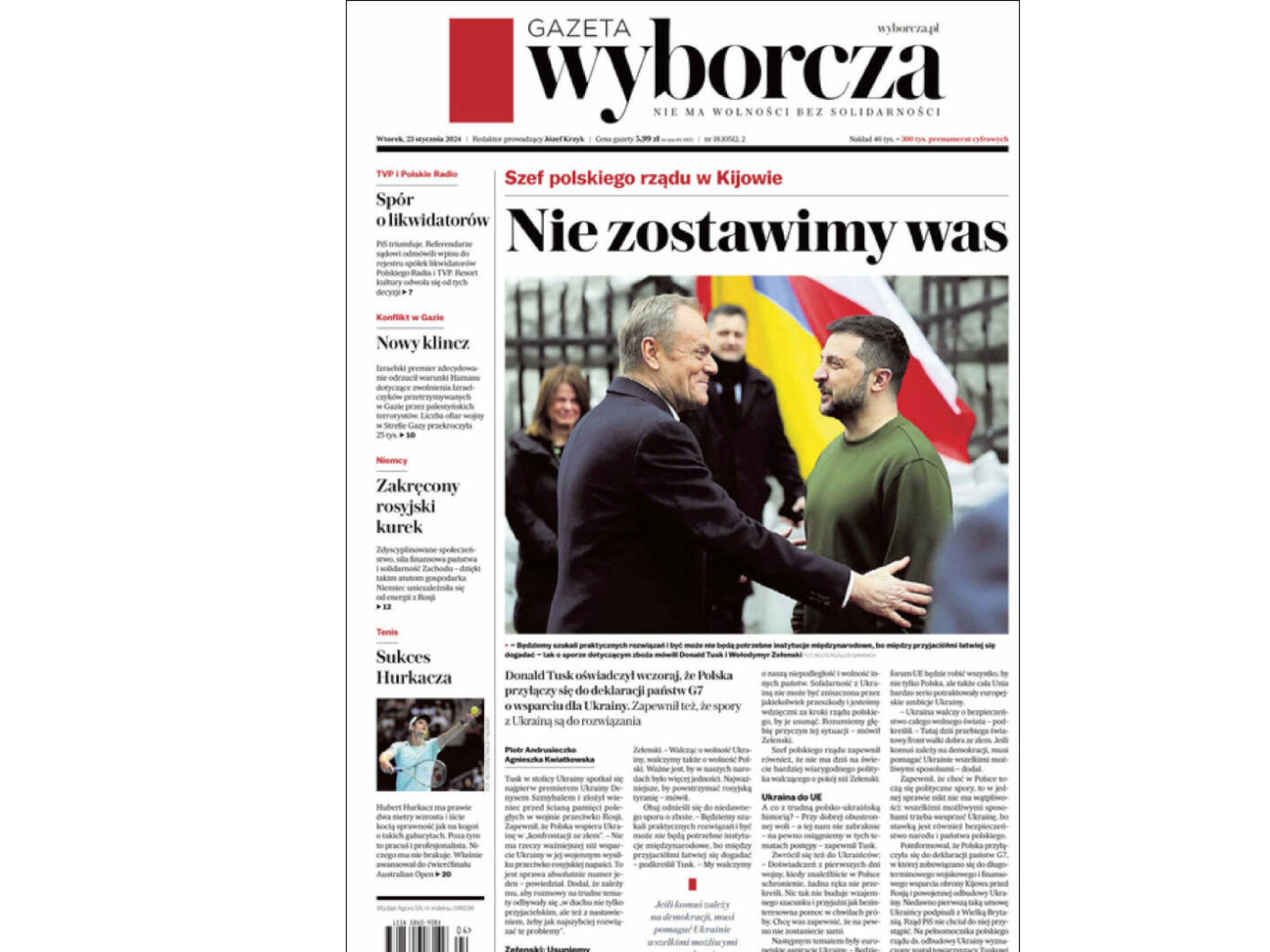
Polish daily Gazeta Wyborcza devotes its front page to the visit of Poland’s Prime Minister Donald Tusk in Kyiv on Monday, which marked his first trip to a foreign capital since taking office last month. Following his meeting with Ukraine’s President Volodymyr Zelensky, Tusk pledged his country’s continued support to its eastern neighbor against the Russian invasion. The two leaders also discussed the possibility of joint arms production and said they “have reached a common understanding” regarding the Polish truckers’ protests.


7 THINGS TO KNOW RIGHT NOW

• Israel says 24 soldiers killed in Gaza fighting, highest single-day toll: Twenty-four Israeli soldiers were killed in Israel's worst day of losses in Gaza, Israel’s military spokesman Daniel Hagari said. Twenty-one soldiers were killed when two buildings they had mined for demolition exploded after militants fired at a nearby tank. Earlier, three soldiers were reported killed in a separate attack in southern Gaza.

• U.S., British forces carry out new strikes in Yemen: U.S. and British forces carried out a new round of strikes in Yemen, targeting a Houthi underground storage site as well as missile and surveillance capabilities used by the Iran-backed group against Red Sea shipping. The Houthis, who control the most populous parts of Yemen, have declared their attacks are in solidarity with Palestinians as Israel continues its strikes on Gaza. For more about what’s at stake in the region, we offer this recent analysis in Daraj, translated from Arabic by Worldcrunch: ​​The Houthi Gamble: Yemen Has Always Been A Proxy War, But Never This Dangerous.

• At least four killed in attacks on Kyiv, Kharkiv: Four people have been killed and dozens of others have been wounded in Russian missile attacks targeting the Ukrainian capital Kyiv and second biggest city Kharkiv. Residential buildings were hit early on Tuesday in the northeastern city of Kharkiv while several other people were hurt in Kyiv when a block of apartments caught fire.

• Trump and Haley to go head-to-head in New Hampshire primary: Former U.S. President Donald Trump will face his remaining Republican opponent, Nikki Haley, in a primary election in New Hampshire on Tuesday. Haley hopes New Hampshire's bloc of independent voters will help her pull off a victory or at least close second. The contest follows Trump's landslide win last week in Iowa.

• EU agriculture ministers set to meet amid farmer protests in France and Germany: EU agriculture ministers are meeting Tuesday to discuss how to resolve European farmers' growing discontent. Farmers have taken to the streets with road blockages and tractor parades in the past few weeks in France, Germany, Poland, Romania and the Netherlands to protest the rise of fuel cost, and new environmental regulations.

• Earthquake hits China’s border with Kyrgyzstan, death toll in China landslide rises: A magnitude-7.1 earthquake hit a mountainous and remote part of China’s far western Xinjiang region early Tuesday, with multiple injuries reported by state media and in Central Asian countries hundreds of miles away. Meanwhile, the death toll from a landslide in China's Yunnan province rose to 25 late on Tuesday as rescue workers worked through freezing temperatures and snow to locate dozens of missing people.


• Wrong terminal: Thousands of overnight airline passengers across Europe
woke up on Tuesday morning in the wrong country after Storm Isha caused disorder with flights, along with dozens of cancellations, diversions and go-arounds in Western Europe. Many aircrafts heading west changed their course to safer landings in continental Europe, often having flown to the destination before failing to land.


BY THE NUMBERS

38,001.81

The Dow Jones Industrial Average closed above 38,000 for the first time on Monday while the S&P 500 also reached a record high, closing at about 4,850. Investors built on the steady rise that stretches back to last week due to increasing optimism about the health of the economy as well as potential earnings of an AI boom in the tech sector.


STORY OF THE DAY

The French art of protocol: behind the scenes of global diplomacy

Organizing summits, placing flags, following schedules, dealing with the unexpected ... The agents of France's Quai d'Orsay who oversee the reception of foreign leaders and promote the country’s image don’t have an easy job, reports Marianne Bliman in Paris-based daily Les Echos.


“The Protocol is there to make sure that everything goes smoothly: the reception in France of high-ranking foreign personalities; the big ceremonies where everyone must know where their seat is; foreign diplomats’ missions in France,” writes former ambassador Daniel Jouanneau in Souvenirs d'un chef du Protocole (2021). For President Charles de Gaulle, protocol was above all “the expression of order in the Republic.” An order that begins with absolute discretion from those responsible for it. “We are in the shadows, anonymous,” one of the agents says.


When it comes to diplomatic relations, every little thing has a meaning. Both substance and style matter. The image of France is at stake and, even more so, its capacity to influence a particularly unstable international scene. In this context, pomp is a significant weapon. But there are also elements that are less visible or, at the very least, that an eye untrained to diplomacy would not perceive or not necessarily deem as important. The menus for an official lunch or dinner, for example.


In addition to the proverbial discretion, the state mission requires self-control, listening skills and flexibility. “A visit, in France or abroad, is a point of balance — unstable in most cases — between two protocol services,” an agent says. “There is always some negotiation between what France requests from us and what the partner country is envisioning.”

Read more on Worldcrunch.com


THIS HAPPENED VIDEO — TODAY IN HISTORY, IN ONE ICONIC PHOTO

 Watch the video: THIS HAPPENED


LEXICON

Berufsinfomat


Austria’s Ministry of Labor announced earlier this month the launch of its own AI chatbot, the Berufsinfomat (Career info bot), to help job seekers find new opportunities — a first such public service in Europe. However, Vienna-based Der Standard reports that the tool, which is powered by OpenAI’s ChatGPT, tends to reproduce certain biases. For instance, the platform suggested job ads in IT for male applicants while it referred female job seekers with identical CVs to gender studies or catering. Similar AI tools are trained via large quantities of data retrieved on the Internet that are embedded with such biases, which can then be found in the platforms’ responses to users. Austrian authorities said they will work to mitigate these prejudices, but also reported that the chatbot had other technical problems. Even if chatbots can’t really think like us, here’s a look from French daily Les Echos at how AI is changing the way we think.


 PHOTO DU JOUR

(see top) Smoke rises following an Israeli airstrike in the southern Gaza city of Khan Younis. The Israeli army reported the deaths of 24 of its soldiers in Gaza on Monday — the deadliest day for its forces since their ground operation began. According to the IDF website, 545 soldiers have been killed since October 7, in addition to the some 1,200 Israeli civilians killed. At least 25,295 people have been killed in the Israeli military campaign in Gaza since then, according to the Hamas-run health ministry. — Photo: Yasser Qudih/Xinhua/ZUMA


MORE FROM WORLDCRUNCH

Russian Special Forces Suppress Protests, Putin Leaving No Room For Wagner Repeat WORLDCRUNCH

How The Biden-Netanyahu Standoff Could Sway The Political Destiny Of Each Man FRANCE INTER
Divine-Right King Modi: Ram Temple And The Crushing Of Secularism In India THE WIRE

✅ SIGN UP

Check out and subscribe to Worldcrunch’s other newsletters: 👉 Sign up here

Newsletter by Emma Albright and Anne-Sophie Goninet


Worldcrunch Today

Par Worldcrunch .com

Worldcrunch works in partnership with top international media and journalists to cover the world, without limits of language or geography. Visit us at www.worldcrunch.com

Les derniers articles publiés

Kenya Protests, WSJ Spy Trial In Russia, Same-Sex Zoom Wedding

par Worldcrunch .com   ⋅  26/06/2024 4 min

Welcome to Wednesday June 26, where the trial for U.S. journalist Evan Gershkovich starts in Russia, outgoing Dutch PM Mark Rutte is the new head of NATO, and 10 same-sex couples from Hong Kong get married over video chat. Meanwhile, Les Echos looks at how Airbus is putting its engineering and innovation at the service of Paralympic athletes.

UN Probe On Israel & Hamas War Crimes, Ukraine Recovery Conference, Spicy Ramen vs. Denmark

par Worldcrunch .com   ⋅  12/06/2024 4 min

Welcome to Wednesday June 12, where UN says both Israel and Hamas have committed war crimes since Oct. 7, Germany hosts an international reconstruction conference for post-war Ukraine, and some South Korean noodles are too hot for Denmark. Meanwhile, Hassan Murad in Daraj writes about when it is pertinent -or not- to compare Gaza and Ukraine.

Israel Announces New Anti-Hamas Campaign, Modi Wins Third Term, King Charles Banknotes

par Worldcrunch .com   ⋅  05/06/2024 4 min

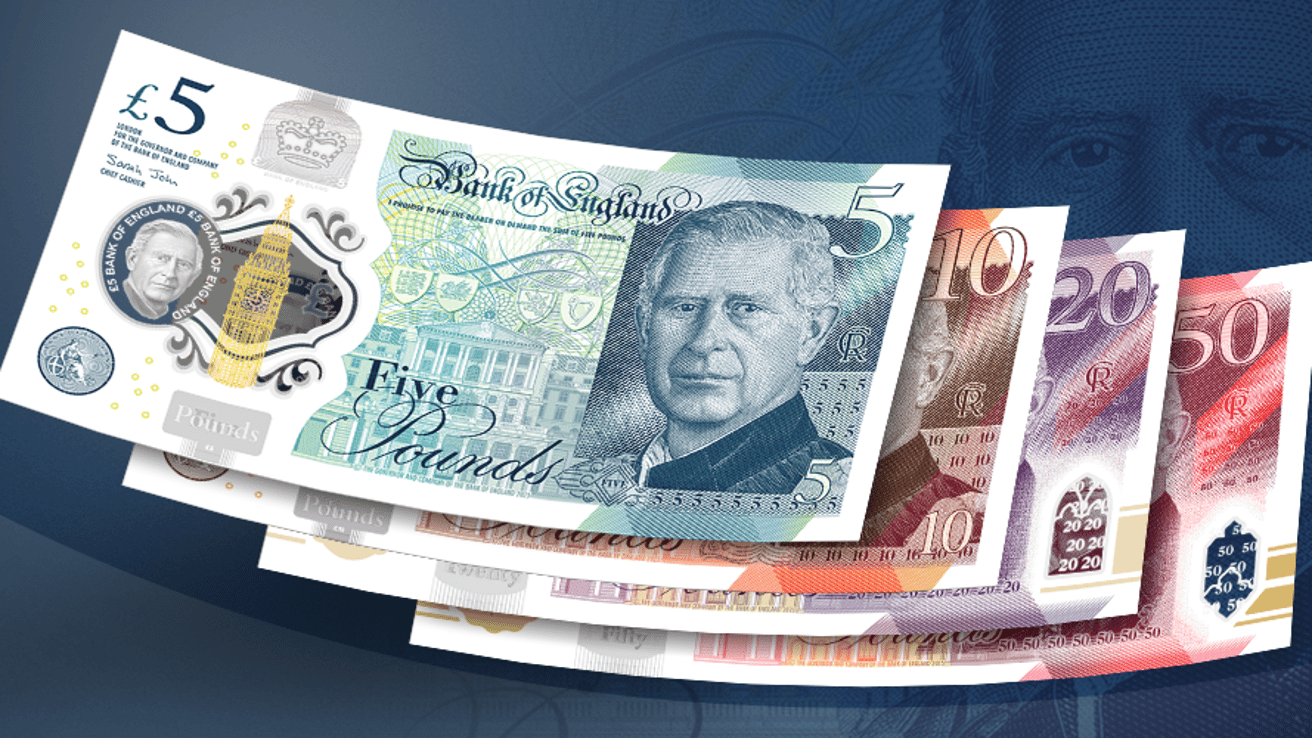
Welcome to Friday June 5, where Israel announces a new military campaign against Hamas, Narendra Modi gets confirmed for a third term as India’s prime minister, and the first King Charles III banknotes start circulating. Meanwhile, independent digital media Daraj reports on exacerbated tensions between Israel and Egypt.

Rafah Attacks Intensify, Trump Trial Closing Arguments, 50 °C In Delhi

par Worldcrunch .com   ⋅  29/05/2024 4 min

Welcome to Wednesday May 29, where Israel intensifies its attack on Rafah, South Africa votes in a high-stake election for the ruling ANC party, and North Korea taunts the South with balloons carrying trash. Meanwhile, Driss Rejichi in Inkyfada reports on Tunisia’s toughening of anti-migrant policies.

Worldcrunch Today: Why Netanyahu's “total victory” objective in Gaza is backfiring so badly

par Worldcrunch .com   ⋅  28/05/2024 4 min

Welcome to Tuesday, May 28, where continued Israeli airstrikes on Rafah kill at least 16, just as Spain, Ireland and Norway officially recognize a Palestinian state; Belgium vows to help Ukraine militarily, and an 81-year-old gets arrested for slingshot shenanigans.

Worldcrunch Today: Dozens Killed In Rafah Strikes, Papua Landslide Toll Jumps, Meet "Echidnapus"

par Worldcrunch .com   ⋅  27/05/2024 4 min

Welcome to Monday, May 27, where IDF strikes kill at least 35 in Rafah, some 2,000 people may have been buried in Papua New Guinea landslides, and Gloucestershire gets ready for its infamous “cheese-rolling race.” Meanwhile, Daraj reports on tech-driven initiatives to help children in war-torn Gaza.

Three European Countries Recognize Palestine, Raisi’s Funeral, Priciest Feather

par Worldcrunch .com   ⋅  22/05/2024 4 min

Welcome to Wednesday May 22, where Norway, Ireland and Spain move to recognize Palestine as an independent state, tens of thousands gather in Tehran for the funeral of Ebrahim Raisi and the world’s most expensive feather goes for sale. Meanwhile, Frederico Raposo in Mensagem looks at how Lisbon’s new urbanism is jacking up the price of housing.

Worldcrunch Today: Netanyahu Condemns ICC Warrant, Iran Mourns Raisi, ChatGPT vs. Scarlett Johansson

par Worldcrunch .com   ⋅  21/05/2024 4 min

Welcome to Tuesday, May 21, where Benjamin Netayahu reacts to the International Criminal Court’s requesting an arrest warrant for alleged war crimes in Gaza, Iran begins five days of mourning after the death of President Ebrahim Raisi in a helicopter crash, and OpenAI “pauses” its synthetic voice because it sounds too much like Scarlett Johansson.

Worldcrunch Today: Iran President Dies In Helicopter Crash, German Floods Ease, “Gathering Of The Kyles”

par Worldcrunch .com   ⋅  20/05/2024 4 min

Welcome to Monday, May 20, where Iranian President Raisi dies in a helicopter crash, an IDF airstrike kills 27 in Gaza, and Kyles are nowhere near as good as Ivans at getting together. Meanwhile, América Economia writes about the “dangerous” proposal to turn Mexico into a welfare state.

Gaza Street Battles, $2 Billion More To Ukraine, Canine In Cannes

par Worldcrunch .com   ⋅  16/05/2024 4 min

Welcome to Thursday, May 16, where Xi Jinping welcomes Vladimir Putin in Beijing, Slovakia’s Prime Minister is in a stable condition following an assassination attempt and French parents find a wooly new way of saving a school.