
💡 SPOTLIGHT
Protest noon: How Navalny's death could backfire on Putin ahead of Russian election
While three "challengers" will be on the ballot in next month's presidential election in Russia, none of the bonafide members of the opposition were approved for the March election. The only organized protest movement was launched from prison by Alexei Navalny, several weeks before he died Friday. Could his death galvanize the opposition to turn election day into a mass rally against the Kremlin?
When it's time to cast their votes in next month's presidential election, Russians will find four names on the ballot: Vladimir Putin — and three token alternative candidates: Nikolai Kharitonov from the Communist Party of the Russian Federation, Leonid Slutsky from the Liberal Democratic Party and Vladislav Davankov from the New People party.
Initially, the Central Election Commission rejected the candidacy of anti-war candidate Yekaterina Duntsova, and finally disqualified the sole remaining opposition candidate, Boris Nadezhdin.
Of course, the single most influential opposition figure of the past decade, who had tried in previous campaigns to run against Putin, was Alexei Navalny, who died suddenly on Friday at the age of 47 under suspicious circumstances at the northern Russian prison where he was serving long sentences on multiple trumped-up charges.
Before his death, Navalny had been relaying a message from prison urging Russians to gather at polling stations at 12:00 p.m. on March 17, the last day of voting. The initiative, dubbed "Protest Noon," was conceived by former St. Petersburg Legislative Assembly deputy Maxim Reznik.
Navalny's ally Ivan Zhdanov, in an interview with independent Russian news site Vazhnyye istorii several days before the opposition leader's death, explained that the "mechanism" of a joint action at the polling places could be a powerful message. "The only way to demonstrate opposition to Putin, whether by voting for alternative candidates or spoiling ballots, is to gather in large numbers at polling stations. This will show that we are not a minority, that we are not merely a marginal anti-war group."
To be clear, when Russians go to the polls March 15-17, there is no doubt who will win. This is not only because serious contenders have been excluded, and election results will go unmonitored, but because Putin remains widely popular in many regions as he effectively serves as a wartime president.
Indeed, as U.S.-based National Security Institute advisor Dmitri Alperovitch explained, Putin has seen the election as a chance to show Russians and the world just how popular he is, hoping for a high turnout and wide margin of victory. By all accounts, Putin would have wanted the election to run as smoothly as possible, which may now be put in jeopardy.
"The death of Navalny is not necessarily helpful to Putin," Alperovitch told Australian public broadcaster ABC. "He wants to show the world he can get high sixties or seventies (of the vote) as a vindication of his hold on power and his popularity." [...]
— Read the full Worldcrunch article.
🌎 7 THINGS TO KNOW RIGHT NOW
• Navalny’s widow vows to continue his work, blames Putin: The official cause of Russian opposition leader Alexei Navalny’s death has not yet been determined, his spokeswoman said on Monday, while his mother and lawyers said they were blocked from entering a mortuary where his body could be kept. The 47-year-old Kremlin critic lost consciousness and died following a walk in the “Polar Wolf” penal colony last Friday, prison authorities reported, but the West and Navalny’s supporters have dismissed the official statement. In Saint Petersburg, 154 people were sentenced by Russian courts to short prison sentences for violating Russia's strict anti-protest laws, after several events to commemorate Navalny were organized during the weekend. Meanwhile, his widow Yulia Navalnaya posted a video statement in which she vowed to continue the Russian opposition leader’s work and “to fight for our country,” and blamed President Vladimir Putin who she says “killed my husband.” She will also attend the EU foreign affairs council on Monday, where Germany is expected to announce new sanctions against Moscow over the death of the Russian activist.
• Russia claims full control of Avdiivka coke plant: Russia's Defense Ministry says its troops now have full control of the vast Soviet-era coke plant in the ruined Ukrainian town of Avdiivka, marking the biggest battlefield gain in nine months for Moscow since it captured the city of Bakhmut in May 2023. Follow our coverage of the Ukraine-Russia war.
• Israel indicates deadline for Rafah offensive, UN court hearings on Israeli occupation opens: Israeli war cabinet member Benny Gantz has warned that if remaining Israeli hostages are not freed by Hamas by the upcoming Muslim holy month of Ramadan starting on March 10, an offensive will be launched in Rafah. Meanwhile, the International Court of Justice opens a week of historic hearings in the Hague on Monday into Israel’s occupation of the Palestinian territories since 1967.
• Dozens killed in Papua New Guinea tribal clash: More than two dozen people have died in a fresh outbreak of tribal violence in the remote northern highlands of Papua New Guinea, in what was described as the worst killings in the Pacific nation’s recent history. Police retrieved at least 26 bodies from the roadside after a clash between rival tribes broke out.
• China's first homegrown passenger jet makes international debut: Beijing’s C919 airliner, a challenger to Airbus and Boeing's passenger jets, has made its first trip outside Chinese territory on Sunday, staging a flyby at the Singapore Airshow. Manufactured by the Commercial Aircraft Corporation of China (COMAC), the C919 can carry just under 200 passengers, the country’s first large homegrown passenger jet.
• Eiffel Tower workers back on strike: Employees at the Eiffel Tower are on strike Monday over the way the world’s top tourist attraction is managed financially, marking the second time the monument is closed in two months following a similar protest in December. This comes as Paris is getting ready to welcome millions of visitors for the Olympic Games.
•Oppenheimer sweeps 2024 BAFTA Film Awards: Christopher Nolan’s Oppenheimer has swept the board at the 77th British Academy Film Awards, winning seven prizes out of eight nominations, including the top honors for best film and best director — a first for the British filmmaker. Yorgos Lanthimos’ Poor Things also took five awards, including leading actress for Emma Stone while Holocaust drama The Zone of Interest won three prizes.
🗞️ FRONT PAGE
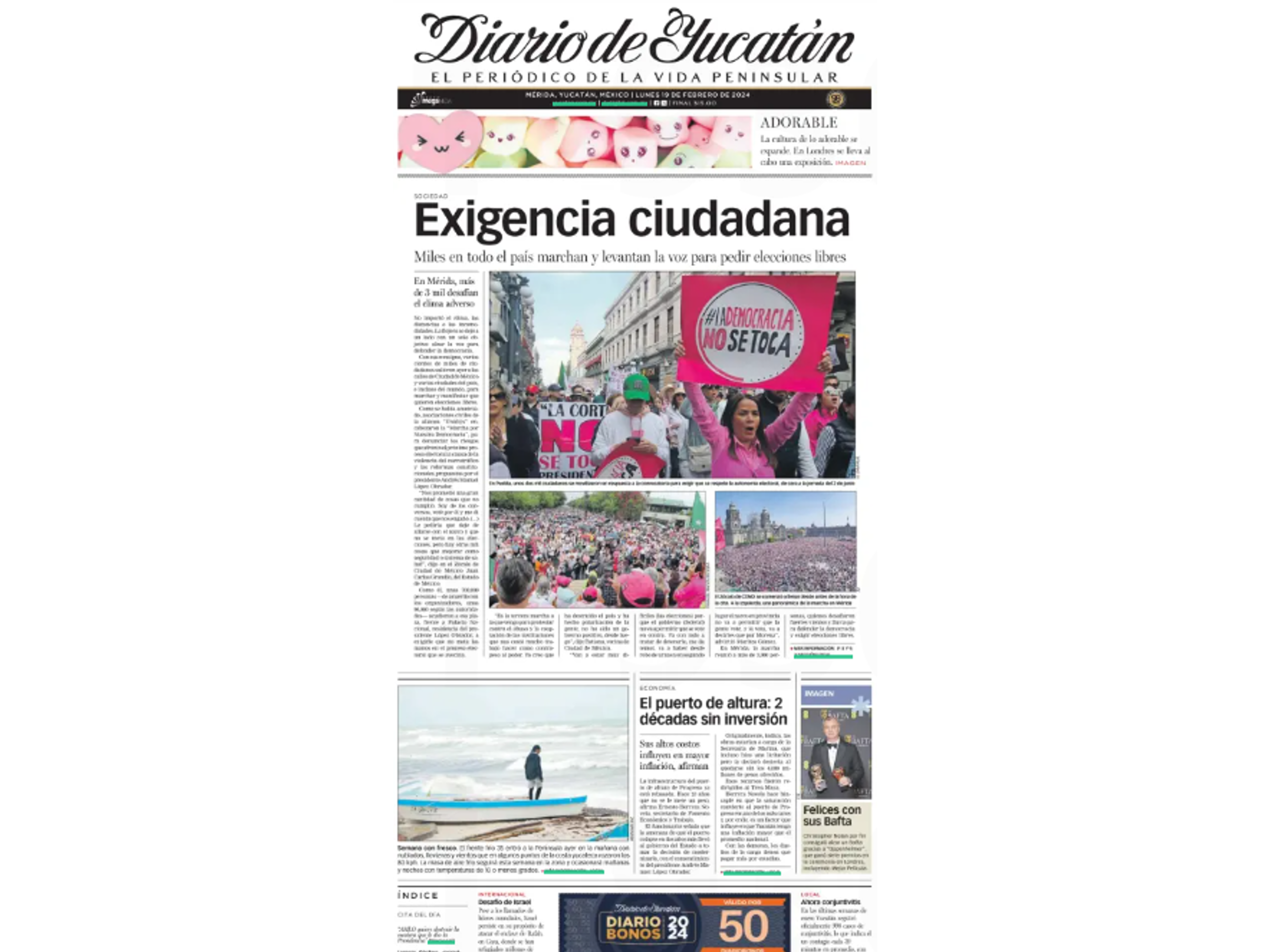
Mexican daily newspaper Diario de Yucatán dedicates its front page to the protesters that have rallied against proposed changes to the electoral authority ahead of June's presidential elections, to the chant “Democracy cannot be touched”. Sunday's demonstration in the capital's historic square is the latest such protest in Mexico in recent years.
📰 STORY OF THE DAY
How Black History Month has spread to Italy — and elsewhere around the world
Originally celebrated in the United States, to highlight the achievements and role of African Americans in the country's history, the practice has found echo in recent years, in nations with a colonial past in Africa — including Italy — and in other places around the world, reports Igiaba Scego in Turin-based daily La Stampa.
🇮🇹 February is the month of an important initiative of Italian Afro-descendants and the diaspora world: Black History Month. The origin is American, born in 1970, in the wake of the struggle for civil rights and to showcase African-American history. It has landed in Italy thanks to people such as Janine Gaëlle Dieudji and Justin Randolph Thompson, who launched the idea in Florence to celebrate Italian Afro-descendant excellence. The practice then spread to other cities, including Bologna, Milan and Turin.
✊ Officially, "Black History Month Florence" was born in 2016 with 19 events and 15 partners and has grown to 350 events today. In the city of Alessandro de Medici, Duke of Florence (who in 1523 became the first Afro-European head of state), realities have joined together, from famous DJ venues to schools and art galleries, creating initiatives at every step that have shaken the white Italian imagination. Take for example, "On Being Present," a virtual gallery of African presence in famous masterpieces on display at the Uffizi and Palazzo Pitti.
🎥 In a country like Italy that still struggles to embrace its plurality, grassroots, anti-racist movements like Black History Month and Yekatit 12 are revolutionary because they help the country finally look in the mirror beyond stereotypes. It is no coincidence that one of the works kept in the past editions of Black History Month was the short film Il Moro by Daphne Di Cinto, an Afro-Italian director, screenwriter and actress. "Il Moro" tells the story of the Black duke of Florence (played by Alberto Boubakar Malanchino) whose very memory Black History Month helped exhume.
➡️ Read more on Worldcrunch.com
📹 THIS HAPPENED VIDEO — TODAY IN HISTORY, IN ONE ICONIC PHOTO

➡️ Watch the video: THIS HAPPENED
#️⃣ BY THE NUMBERS
¥632.7 billion
During the Lunar New Year in China, domestic tourism spending hit 632.7 billion yuan ($87.8 billion), about 47% more compared to the same holiday period last year according to government figures.The holiday, known as the Spring Festival in China, is the world's largest annual migration and official data shows that this year spring break jumped above pre-COVID levels.
📣 VERBATIM
“The comparison between Israel to the Holocaust of the Nazis and Hitler is crossing a red line.”
— After Brazil’s president Luiz Inácio Lula da Silva stated that the Gaza war is happening between extremely prepared soldiers and civilians, having “no parallel in other historical moments, other than when Hitler decided to kill the Jews,” Israel’s Prime Minister Benjamin Netanyahu remarked that “the comparison between Israel to the Holocaust of the Nazis and Hitler is crossing a red line.” Israel has now summoned the Brazilian ambassador for a meeting.
📸 PHOTO DU JOUR
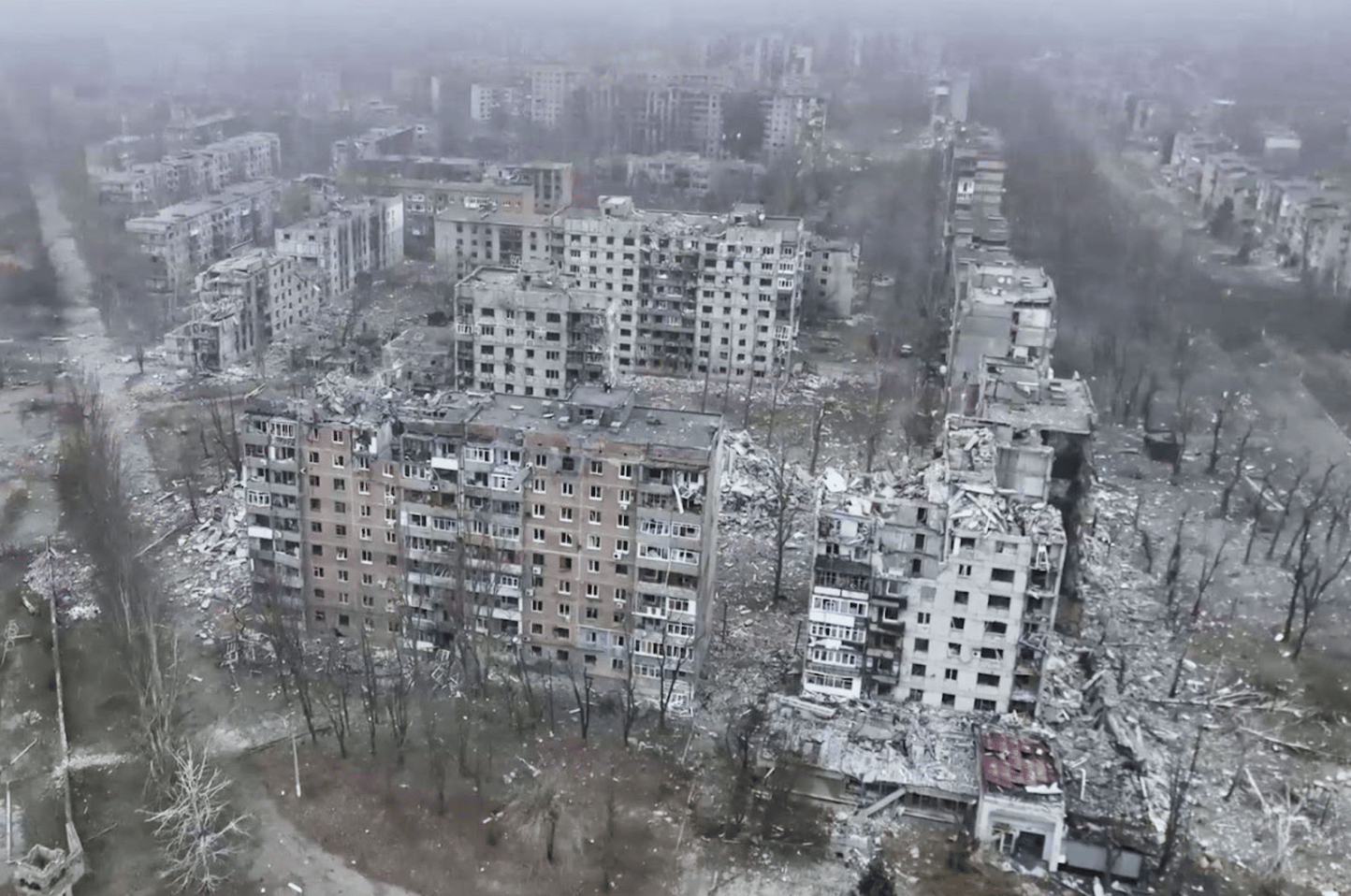
A view of Avdiivka, which Russian forces said they have taken full control over the weekend after one of the most intense battles of the war in the eastern Ukrainian city. — Photo: TASS/ZUMA
👉 MORE FROM WORLDCRUNCH
• The Freedom Fighters Of Belarus — We Forget Their Struggle At Our Peril — DIE WELT
• Milei And The Pope: What This Argentine Odd Couple Tells Us About Capitalism Today — CLARÍN
• "Reading Time: 59 Minutes?" Digital Forces Push Publishers Toward Shorter Books — ETHIC
✅ SIGN UP
Check out and subscribe to Worldcrunch’s other newsletters: 👉Sign up here
✍️ Newsletter by Anne-Sophie Goninet and Agnese Tonghini
...