

💡 SPOTLIGHT
Will Israel-Hezbollah escalate? First ask what Iran wants in Lebanon
As Israel prosecutes its war on Gaza, Lebanon found itself caught in the daily attacks between Israel and Hezbollah. Lebanese know that Israel has made its position clear, which leaves the big question mark with the regime in Tehran, which largely guides Hezbollah in its response to Israel, writes Hani Adada in Beirut-based independent digital media Daraj.
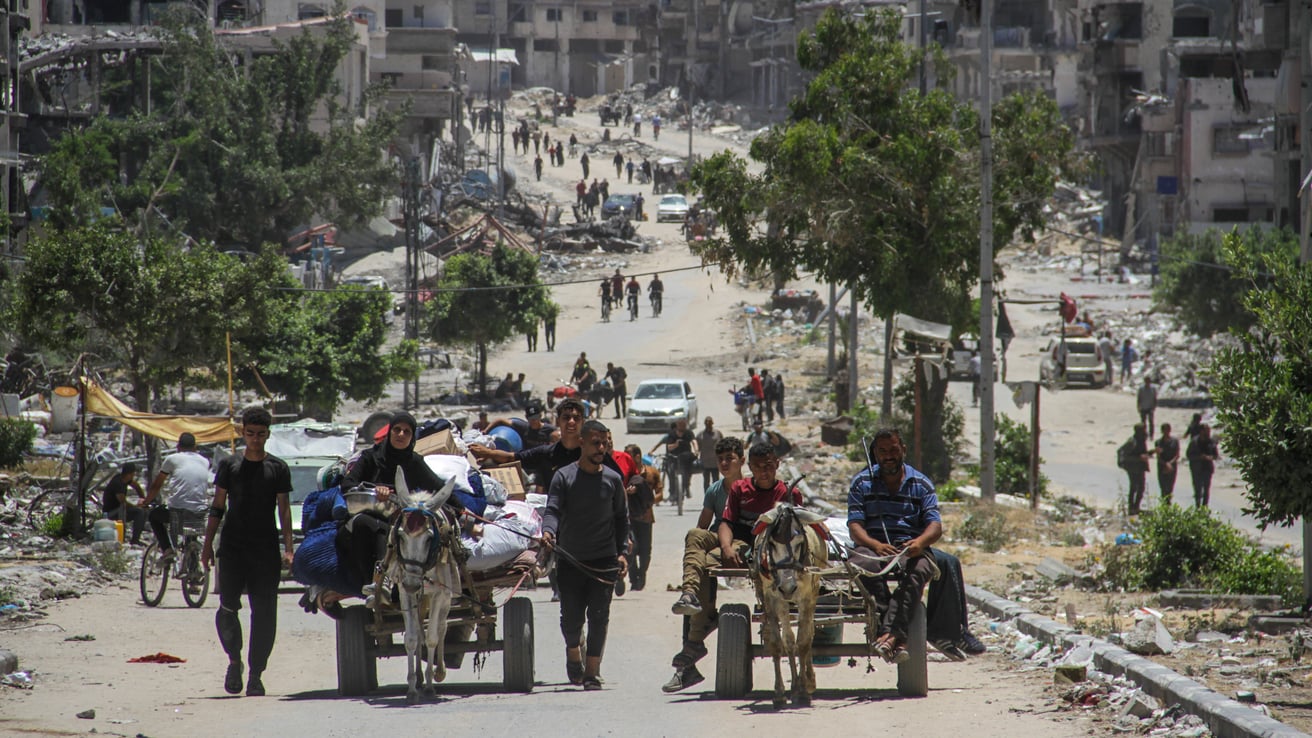
The Oct. 7 Hamas attack on Israel was a turning point for the Middle East. It set off a chain of events across the region, most notably along the Lebanese-Israeli border where Hezbollah and Israel have exchanged nearly daily attacks, at the same time that Israel is busy prosecuting its bloody war on Gaza.
As the Israeli military expands its control over Gaza, it is stepping up its artillery and air attacks on southern Lebanon, inflicting human casualties as well property destruction to border areas.
At the same time, Hezbollah, the most powerful Iranian-backed militant group in the region, has continued its attacks on Israeli forces and military bases. It has largely avoided attacking evacuated settlements on the borders with Lebanon with its full destructive force.
Hezbollah does not seek to expand the war that was imposed on it; yet it also does not want to be relegated to its sidelines, which would contradict its longstanding political discourse and declared goals of being a protagonist in the region's conflict.
Thus the Lebanese militant group has found itself between two complicated options at a decisive historical moment: either being a bystander, which involves a huge political cost with unpredictable direct and indirect repercussions, or engaging in the war, with the huge material and human losses.
This all comes as Lebanon is already entering its fifth year of nationwide economic and social collapse. [...]
— Read the full article by Hani Adada for Daraj, translated into English by Worldcrunch.
🗞️ FRONT PAGE
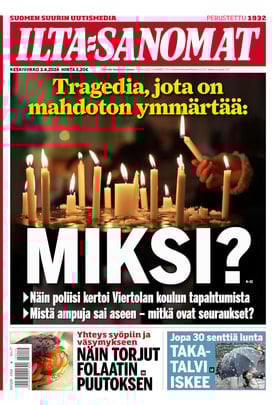
“Why?” asks Helsinki-based evening newspaper Ilta-Sanomat on its front page, reporting on the shooting at Viertola school in Vantaa, Finland, on Tuesday morning. A 12-year-old child is suspected of killing a classmate of the same age and wounding two others. The suspect, who was carrying a gun, fled the scene and was later apprehended by the police. He will be placed in the care of social services. Flags in Finland flew at half-mast on Wednesday to mourn the tragedy, which the daily describes as “impossible to understand.”
🌎 7 THINGS TO KNOW RIGHT NOW
• Taiwan's biggest earthquake in at least 25 years killed at least nine people. It injured more than 800 people and authorities have estimated that 127 people are missing. Television broadcasts showed images of buildings tilted at precarious angles in the mountainous eastern county of Hualien, near the epicenter of the 7.2 magnitude quake.
• NATO foreign ministers meet for two days to discuss long-term military support for Ukraine. This includes a proposal for a $107 billion five-year fund and a plan seen as a way to “Trump-proof” aid for Kyiv. Meanwhile, Ukraine lowered the military conscription age from 27 to 25 in an effort to replenish its depleted ranks after more than two years of war with Russia. Read more about conscription in Ukraine here.
• Joe Biden has said he is “outraged and heartbroken” by Israel’s killing of seven aid workers in Gaza. The U.S. president’s rebuke is the latest example of his conflicting messages on the war, as his administration becomes increasingly critical of Israeli Prime Minister Benjamin Netanyahu’s government, even while doubling down on the need to supply Israel with weapons. In his statement, issued on Tuesday night, Biden accused Israel of not doing enough to protect innocent civilians in its war against Hamas.
• A fire at a nightclub in Istanbul has killed at least 29 people and injured one. The fire broke out around midday at the Masquerade club, which was closed for renovations and which occupies two floors underneath a 16-story residential building in the Gayrettepe district of the Turkish city. Arrest warrants were issued for five people, including the management of the club and the person responsible for the renovations.
• Uganda’s Constitutional Court has rejected a petition seeking to annul an anti-gay law, which has been condemned internationally as one of the toughest in the world.The court found on Wednesday that some sections of the law violated the right to health and was “inconsistent with right to health, privacy and freedom of religion,” but it did not block or suspend the law. Follow our international coverage of LGBTQ+ issues here.
• Joe Biden and Xi Jinping talk for the first time since November. In an effort to keep tensions low between the two countries, the U.S. and Chinese presidents discussed, in a phone call on Tuesday, avenues of cooperation, including recent shared efforts to combat climate change and narcotics. But there was significant disagreement on Taiwan and economic issues.
• Two Irish basketball teams have been ordered to replay the final 0.3 seconds of a match. Limerick Sport Eagles beat Portlaoise Panthers 80-78 in March but the game ended in controversial fashion, with free throws (which ended up being decisive) awarded as the buzzer sounded. After much back and forth, the National League Committee ruled the game would not be replayed in full, but instead only the remaining 0.3 seconds.
📰 STORY OF THE DAY
Where today's agricultural crisis fits into the arc of economic history
The industrial revolution, which was also agricultural, allowed humanity to escape the “nutritional trap.” Now, agriculture is facing new challenges: income and ecological traps, writes Jean-Marc Daniel in French daily Les Echos.
🌾 The challenge for a peasant in antiquity was to produce enough food to feed his loved ones. Until the mid-18th century, life was punctuated by scarcity and famine. For Angus Deaton, winner of the 2015 Nobel Prize in economics, society was stuck in a "nutritional trap." Before 1760, any increase in population actually led to food shortages. After 1760, thanks to the industrial revolution, which was also agricultural, humanity emerged from this “nutritional trap.”
📈 The world has seen spectacular growth in agricultural productivity, allowing it to escape the nutritional trap. But recently, a phenomenon of overproduction has emerged, the immediate consequence of which is ever-increasing pressure on prices. As a result, farmers from Brussels to New Delhi are denouncing a new trap that concerns them directly. The stagnation of their selling prices due to saturated demand, mostly in developed countries, is coming up against their rising production costs.
⚖️ Rather than debate prices, governments and agricultural unions should be focusing on how to “escape” simultaneously from the nutritional, income and ecological traps. Some answers can be found in the works on agriculture of Theodore Schultz, winner of the 1979 Nobel Prize in economics. He believes that government intervention, which has always been involved in agricultural problems, must evolve. In his view, prices must be set in a market open to both national and international competition, so that consumers are not prevented from feeding themselves properly.
➡️ Read more on Worldcrunch.com
💬 LEXICON
福宝
The first giant panda to hail from South Korea has left the zoo where she was born to be flown to China. The panda superstar named Fu Bao (福宝 in Mandarin, 푸바오 in Korean, meaning “lucky treasure”) gained global attention three years ago when a video of her went viral on YouTube. Her fans expressed gratitude for the joy she brought during her four years at the Everland zoo, as she embarked on her journey to the Sichuan province.
📹 THIS HAPPENED VIDEO — TODAY IN HISTORY, IN ONE ICONIC PHOTO

➡️ Watch the video: THIS HAPPENED
#️⃣ BY THE NUMBERS
20,000
Botswana's President Mokgweetsi Masisi has "threatened” to send 20,000 elephants to Germany, as part of a conservation dispute between the two countries. Germany proposed stricter limits on importing hunting trophies, leading Botswana to emphasize the necessity of hunting to manage the elephant population. Botswana, home to a significant elephant population, faces challenges of herds damaging property and crops. Discussions continue between Botswana and Germany regarding import rules, amid broader international debates on trophy hunting and ivory trade bans.
📸 PHOTO DU JOUR
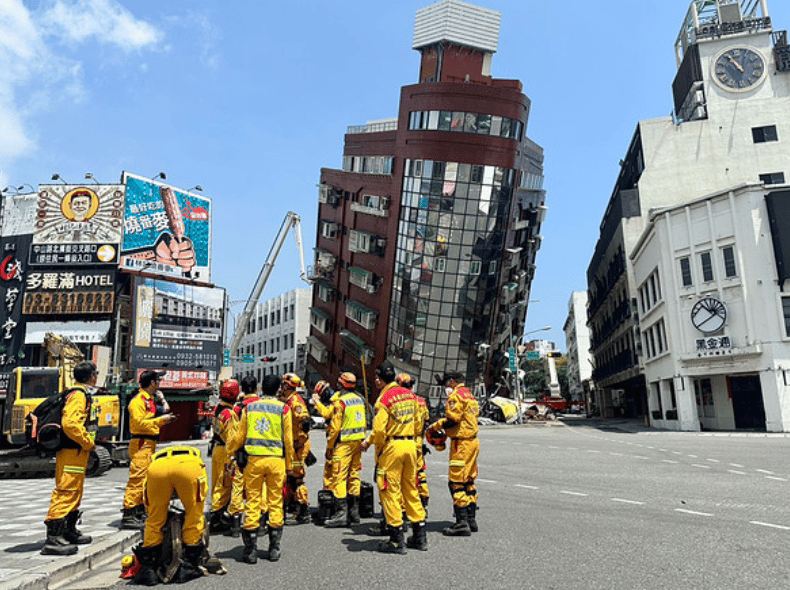
Rescue teams at work near damaged residential buildings in Hualien, southeastern Taiwan. Taiwan was hit by its strongest earthquake in 25 years, with a magnitude of 7.2, resulting in nine deaths, more than 800 injured and 50 missing individuals. — Photo: China Times/Xinhua/ZUMA
👉 MORE FROM WORLDCRUNCH
• A Plan For "Domicide": Israel's Attempt To Destroy The Palestinian Home — DARAJ
• Why Chinese Overcapacity Is About To Slam Into Europe's Economy — DIE WELT
• Executions And Torture — The Darkest Side Of Ecuador’s Militarization — AGÊNCIA PÚBLICA
✅ SIGN UP
Check out and subscribe to Worldcrunch’s other newsletters: 👉Sign up here
✍️ Newsletter by Emma Albright and Cory Agathe
...